Ocarina of Time Sells 5.2 Million in 4 Days on Switch 2
Nintendo says the Ocarina of Time remake sold over 5.2 million units in four days, a Switch 2 record, plus the price and what resellers should watch.
4 min readRead Blog →
 By Jessy • Oct 23, 2026
Home Depot clearance price endings are a hint, not an official code. Resellers watch for clearance prices that end in .06 or .03 on a yellow tag, because those endings usually mean the item is marked down and on its way out of the store. Below is what the endings can tell you, where the tags hide, and how to check a deal before you spend a dollar.
Home Depot does not publish a guide to its price endings. What we have is years of resellers comparing notes in the aisle. Most people agree on a simple pattern: a normal price looks normal, and a clearance price often ends in an odd number like .06 or .03.
Here is the honest part. Guides online do not agree on the order. Some say .06 is the first markdown and .03 is the final one. At least one price tracking site says the opposite. That tells you the ending alone is not enough to know if a price will drop again.
| Price ending | What resellers usually read into it | What to do |
|---|---|---|
| Normal price, no yellow tag | Regular price | Skip unless it sells way higher online |
| .06 on a yellow tag | Marked down, likely not being restocked | Check the sold price now |
| .03 on a yellow tag | Marked down, may be near the end | Check the sold price now |
| .01 | A "penny" price, meant to be pulled | Do not count on buying it |
So how do you use the endings? Treat them as a signal to stop and look, then let the numbers decide. The ending tells you to check. The sold listings tell you to buy.
If you want to track one item over time, take a photo of the tag each time you visit. After a few trips you will see how your store moves prices, which beats any chart online. Every store runs a little differently.
If you also shop Walmart, the endings work differently there. We broke that down in Walmart Clearance Price Endings: What the Last Digit Means.
The yellow tag is the fastest way to spot clearance at Home Depot. You will see it on the shelf label, and sometimes as a sticker right on the box. Train your eye to look for yellow first.
When you find one, read the whole tag, not just the big number:
The register price is what counts. If a tag and the item do not match, scan it in the Home Depot app or ask an associate to check. Be polite and take the answer you get. Associates are busy. The ones who know you as a friendly regular are the ones who will tell you when a new batch of yellow tags goes up.
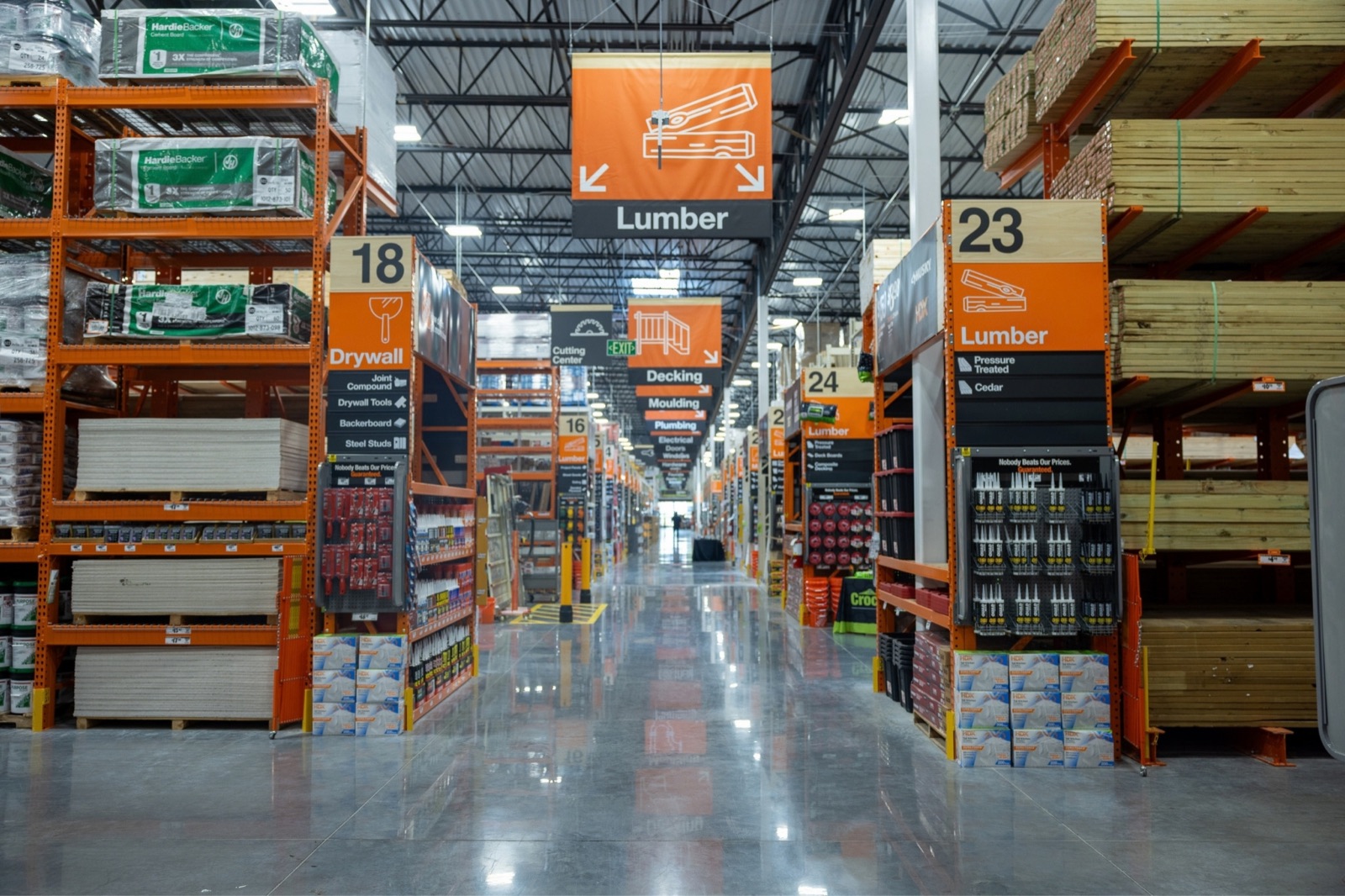
Most stores have a clearance end cap or two, but that spot is usually picked over. The better finds are often scattered around the store. Here is where to walk:
Walk the store the same way each visit. You will start to notice when something new turns yellow. For more on spotting markdowns that most shoppers miss, read our guide to Walmart hidden clearance.
A cheap price is not the same as a good flip. Run every yellow tag through the same quick check before it goes in your cart.
Here is the math on a made-up example so you can see how fast costs add up:
| Line | Amount |
|---|---|
| Clearance price | $24.06 |
| Sales tax (example) | $2.00 |
| Average sold price online | $55.00 |
| Fees at 15% | $8.25 |
| Shipping | $9.00 |
| Box and tape | $1.00 |
| Profit | $10.69 |
That $55 sale only puts about $10 in your pocket. That is worth it for a quick flip you can ship in a small box. It is not worth it for something bulky that sits for two months. Some flips lose money when prices online drop after you buy, so leave yourself room.
Big or heavy items can still work if you sell them locally on Facebook Marketplace or OfferUp. The buyer picks up and you skip shipping.
There is no public markdown schedule. Timing varies by store, by department and by how much of an item is left. That is why the endings help: they give you a clue about where an item is in the markdown process, even if you cannot see the calendar.
A few patterns hold up well:
Do not wait too long on something that already checks out. If the numbers work at today's price, a lower price next week does you no good if someone else buys it first.
Guides disagree on which ending comes last. Compare the clearance price to the original price on the tag, and track it with photos at your store to see how it moves.
Resellers widely report that Home Depot treats penny items as items to pull from the floor, not sell, so a cashier may say no. As of October 2026, check with your store and accept the answer without pushing.
The app shows the price at the store you select, which helps you confirm a tag. In-store clearance does not always show up online, so the shelf tag and a scan are still your best check.
No. Prices and stock vary by store, so one location may have a deeper markdown than the one ten minutes away.
Checking stock and prices one store at a time means a lot of driving. Members of the Resale Rascals membership get daily leads, custom price monitors with Discord alerts and live in-store stock checks. They also get the Guardian app for scanning items and checking nearby stores. See how the membership works.
 Nov 11, 2026
Nintendo says the Ocarina of Time remake sold over 5.2 million units in four days, a Switch 2 record, plus the price and what resellers should watch.
 Nov 11, 2026
Where sneaker clearance shows up at outlets, big box stores and online, which sizes and colorways resell, and how to check value before you buy.
 Nov 10, 2026
The McDonald's Pokemon Happy Meal is live in the US through December 14 with 15 box toys and 15 cards. What is inside and what resellers should know.